


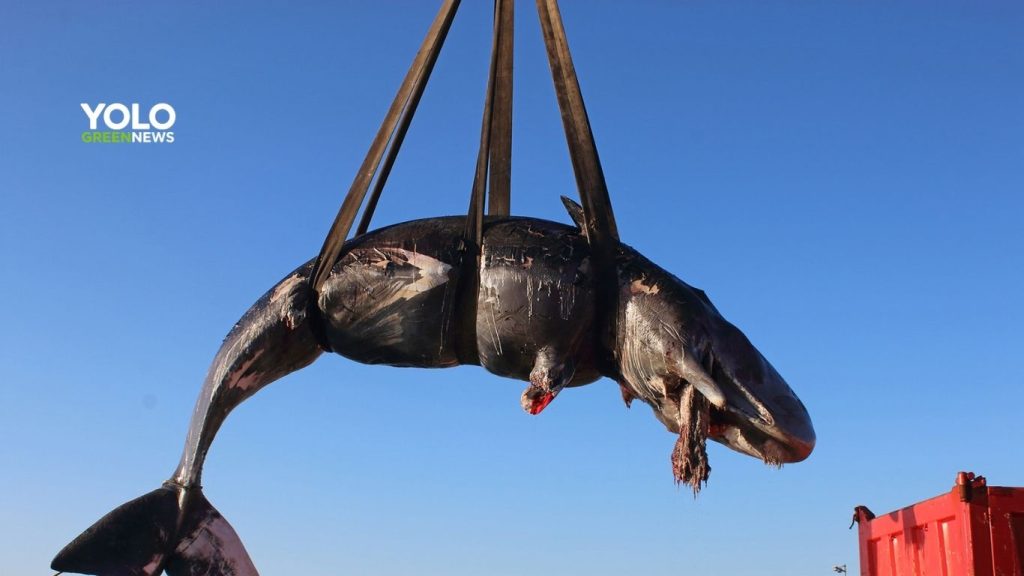
A heartbreaking incident occurred along the coast of Sardinia, Italy, after the body of an over 8-meter-long female sperm whale was discovered on a beach. The whale was pregnant at the time of its death. Veterinarians and marine biologists examined its stomach and found an astonishing 22 kilograms (nearly 50 pounds) of plastic waste, occupying more than two-thirds of the stomach.
The waste included plastic bags, plastic plates, pieces of fishing nets, corrugated electrical tubing, and various types of packaging. The massive accumulation caused an obstruction in the whale’s digestive system, preventing it from properly absorbing nutrients from its natural food and ultimately leading to the deaths of both the mother and her unborn calf.
The incident highlights the devastating impact of plastic pollution on marine life, particularly large marine animals that can accidentally ingest plastic waste after mistaking it for food. As plastic pollution continues to accumulate in the world’s oceans, cases like this serve as a stark warning of the growing threat to marine ecosystems.
The loss of a whale is more than the loss of a single animal. Whales play an important role in maintaining healthy marine ecosystems by helping cycle nutrients and supporting ocean productivity. This tragic case is therefore another urgent reminder of the need to reduce plastic consumption and improve waste management before human-generated waste causes even greater harm to marine life and the health of our oceans.
Cr. Wijarn Simachaya Fanpage
Related posts:


