


Panasonic Energy is developing an all-solid-state battery capable of operating at temperatures of up to 150°C, with customer samples scheduled for delivery between October and December 2026. The technology uses a solid electrolyte instead of a liquid electrolyte, offering potential advantages in safety, heat resistance, and energy density.
Meanwhile, the battery industry is advancing a range of technologies, including LFP, NMC, sodium-ion, and solid-state batteries. Each has different material compositions and characteristics, meaning that future battery recycling cannot rely on a single process for all battery types.
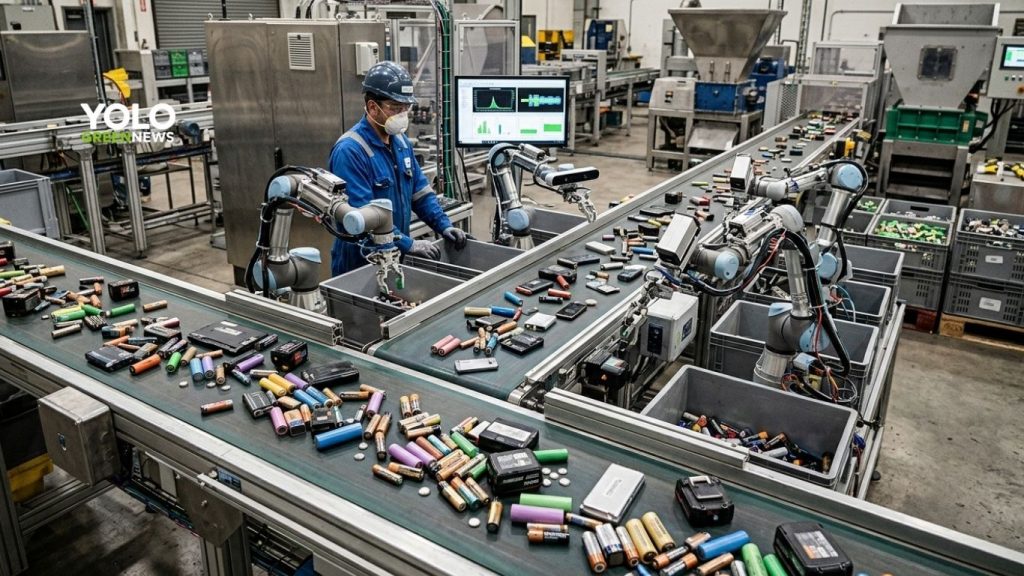
Battery recycling systems must therefore begin with battery identification, safe management of residual energy, sorting by chemistry, and selecting appropriate recycling processes, such as pyrometallurgy, hydrometallurgy, and direct recycling. These approaches aim to recover valuable materials for reuse.
In addition, the Digital Battery Passport is emerging as an important tool for improving access to information on battery composition, performance, and end-of-life management. This highlights that the future of the Circular Economy depends not only on recycling technologies but also on data transparency and effective battery management throughout the entire life cycle.
Related posts:


