
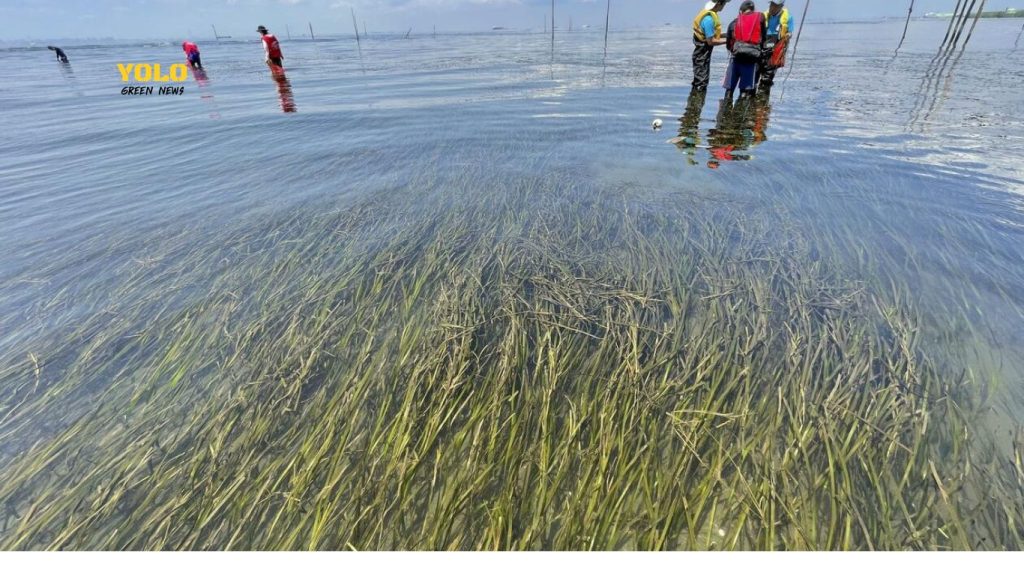
The Japanese government is moving forward with plans to study blue carbon—the process of capturing and storing carbon dioxide beneath the ocean—using marine vegetation such as mangroves and seaweed. These underwater plants absorb CO₂ and store it deep in the sea, offering a promising way to cut greenhouse gas emissions and mitigate climate change.
The initiative involves the Ministry of the Environment, the Japan Agency for Marine-Earth Science and Technology (JAMSTEC), and Eneos Corp. The research will examine how seaweed behaves once stored beneath the ocean and assess the potential environmental impacts of the process.
Ambitious Carbon Capture Targets
- 1 million tons of CO₂ captured annually through blue carbon by 2035
- 2 million tons by 2040
- By comparison, in 2023, coastal plants in Japan captured only 34 tons of CO₂
While Japan’s carbon emissions have been declining thanks to renewable energy adoption and the restart of nuclear reactors, the country still needs to significantly increase carbon absorption capacity to meet its Net Zero emissions goal by 2050.
Currently, Japan relies heavily on forests for carbon sequestration, but their capacity is declining as trees age—prompting the need for new carbon sinks, such as ocean-based storage through blue carbon technologies.
Source: Instagram