
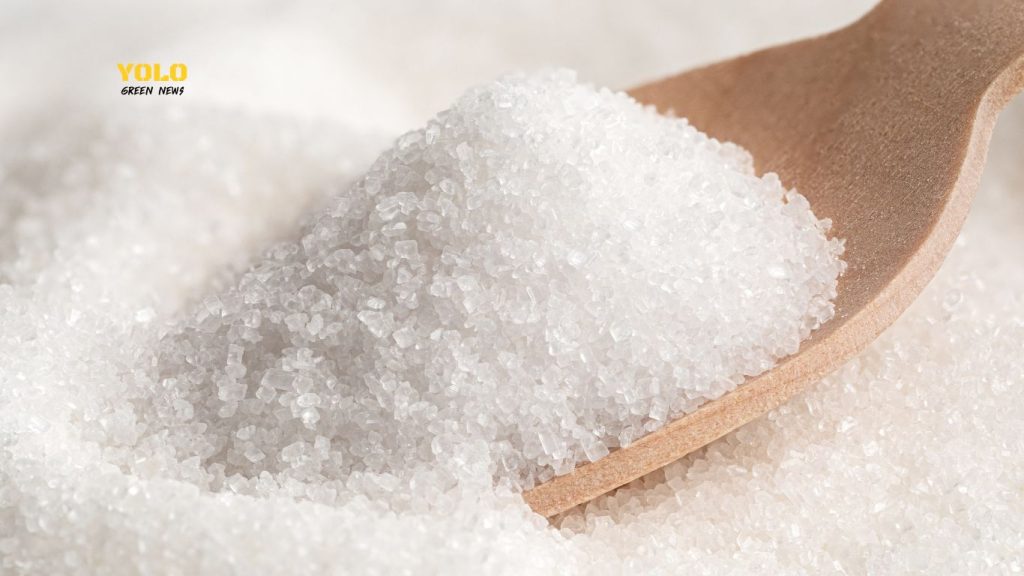
China has developed a groundbreaking technology to produce sugar from carbon dioxide, reducing reliance on resource-intensive crops like sugarcane and sugar beet, which require vast amounts of land and water.
The process uses methanol, derived from captured CO₂ or industrial waste, which is then transformed through an in vitro biotransformation (ivBT) enzyme process into high-carbon sugars and starch. This method achieves a conversion rate of up to 86% while consuming less energy than conventional sugar production.
Benefits and Impact
- Reduces carbon waste by reusing captured CO₂
- Strengthens China’s food security by reducing sugar imports
- Opens opportunities for wider industrial applications of sugar
- Offers a cleaner, more sustainable alternative to traditional agriculture-based production
This innovation could reshape both the food and industrial sectors, turning a major greenhouse gas into a valuable resource for the future.
Source: Instagram
Related posts:
Researchers in South Korea are developing an **“smart patch”** designed to stimulate stem...
Google has applied for approval from the U.S. Environmental Protection Agency (EPA) to re...
The United States is preparing draft measures to restrict the import of new **optical tra...
Japan has introduced the Do Hiemon Box, a “Human Refrigerator” designed to rapidly cool t...
Post Views: 11